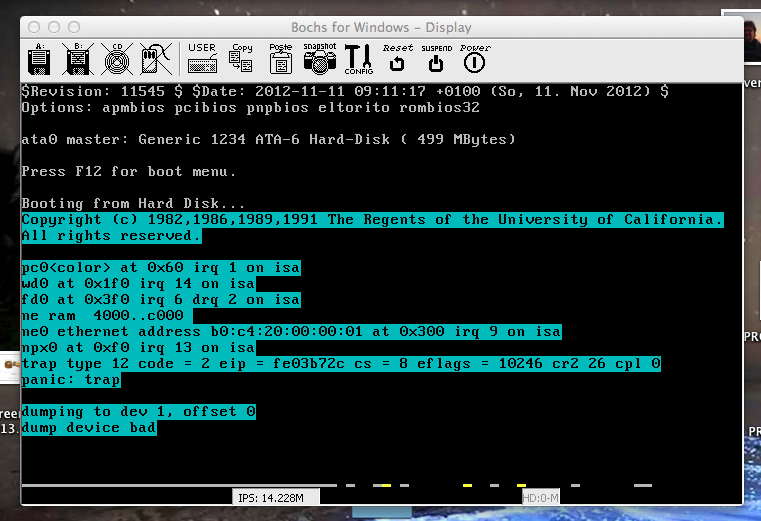
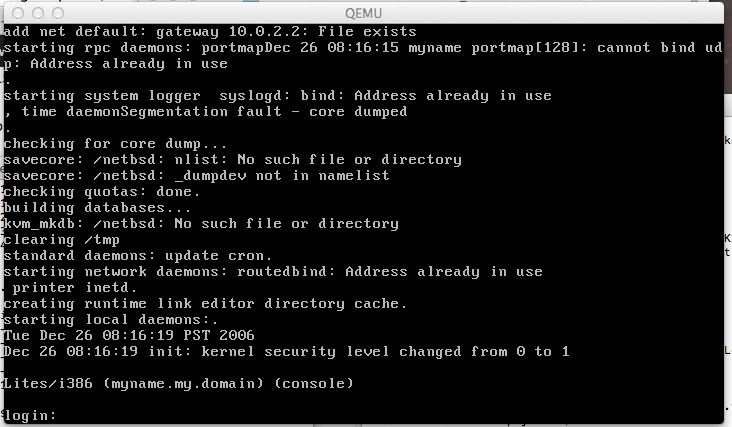
I was thinking after rebuilding the Mach disk, that back in the say it was insinuated that the changes from Net/2 to 386BSD 0.0 were quite minimal. So I figured I should take a look. The first thing to do would be to clean up Net/2’s kernel to look more like 386 BSD’s. This was trivial as there wasn’t much of anything structure wise done. Running the patch was pretty easy:
$ diff -ruN ../../../../net.2/sys . > /tmp/net2-386bsd00.patch
The patch is about 1MB. Much larger than I expected! Applying the patch to Net/2 shows that a substantial amount of files changed:
$ patch -p0 < /tmp/net2-386bsd00.patch
patching file ./conf/files
patching file ./i386/conf/GENERIC.i386
patching file ./i386/conf/Makefile.i386
patching file ./i386/conf/devices.i386
patching file ./i386/conf/files.i386
patching file ./i386/i386/autoconf.c
patching file ./i386/i386/conf.c
patching file ./i386/i386/genassym.c
patching file ./i386/i386/locore.s
patching file ./i386/i386/machdep.c
patching file ./i386/i386/pmap.c
patching file ./i386/i386/symbols.raw
patching file ./i386/i386/trap.c
patching file ./i386/i386/vm_machdep.c
patching file ./i386/include/psl.h
patching file ./i386/isa/com.c
patching file ./i386/isa/fd.c
patching file ./i386/isa/isa.c
patching file ./i386/isa/npx.c
patching file ./i386/isa/pccons.c
patching file ./i386/isa/wd.c
patching file ./i386/isa/wt.c
patching file ./i386/stand/Makefile
patching file ./i386/stand/bmap.c
patching file ./i386/stand/boot.c
patching file ./i386/stand/bootxx.c
patching file ./i386/stand/breadxx.c
patching file ./i386/stand/cga.c
patching file ./i386/stand/conf.c
patching file ./i386/stand/confxx.c
patching file ./i386/stand/fd.c
patching file ./i386/stand/fdbootblk.c
patching file ./i386/stand/fs.c
patching file ./i386/stand/kbd.c
patching file ./i386/stand/libsa/Makefile
patching file ./i386/stand/libsmsa/Makefile
patching file ./i386/stand/prf.c
patching file ./i386/stand/saio.h
patching file ./i386/stand/srt0.c
patching file ./i386/stand/trimhd.c
patching file ./i386/stand/wd.c
patching file ./kern/Makefile
patching file ./kern/init_main.c
patching file ./kern/kern__physio.c
patching file ./kern/kern_descrip.c
patching file ./kern/kern_exec.c
patching file ./kern/kern_execve.c
patching file ./kern/kern_exit.c
patching file ./kern/kern_fork.c
patching file ./kern/kern_malloc.c
patching file ./kern/kern_physio.c
patching file ./kern/kern_proc.c
patching file ./kern/kern_sig.c
patching file ./kern/kern_subr.c
patching file ./kern/makesyscalls.sh
patching file ./kern/subr_rlist.c
patching file ./kern/subr_rmap.c
patching file ./kern/sys_process.c
patching file ./kern/syscalls.master
patching file ./kern/tty.c
patching file ./kern/tty_pty.c
patching file ./kern/tty_ring.c
patching file ./kern/tty_subr.c
patching file ./kern/uipc_mbuf.c
patching file ./kern/vfs__bio.c
patching file ./kern/vfs_bio.c
patching file ./net/af.h
patching file ./net/bpf.c
patching file ./net/bpf.h
patching file ./net/bpfdesc.h
patching file ./net/if.h
patching file ./net/if_arp.h
patching file ./net/if_dl.h
patching file ./net/if_llc.h
patching file ./net/if_sl.c
patching file ./net/if_slvar.h
patching file ./net/if_types.h
patching file ./net/netisr.h
patching file ./net/radix.h
patching file ./net/raw_cb.h
patching file ./net/route.h
patching file ./net/slcompress.h
patching file ./netinet/icmp_var.h
patching file ./netinet/if_ether.h
patching file ./netinet/in.h
patching file ./netinet/in_pcb.h
patching file ./netinet/in_proto.c
patching file ./netinet/in_systm.h
patching file ./netinet/in_var.h
patching file ./netinet/ip.h
patching file ./netinet/ip_icmp.h
patching file ./netinet/ip_var.h
patching file ./netinet/tcp.h
patching file ./netinet/tcp_debug.h
patching file ./netinet/tcp_fsm.h
patching file ./netinet/tcp_seq.h
patching file ./netinet/tcp_timer.h
patching file ./netinet/tcp_var.h
patching file ./netinet/tcpip.h
patching file ./netinet/udp.h
patching file ./netinet/udp_var.h
patching file ./nfs/nfs.h
patching file ./nfs/nfs_subs.c
patching file ./nfs/nfs_vnops.c
patching file ./nfs/nfscompress.h
patching file ./nfs/nfsdiskless.h
patching file ./nfs/nfsiom.h
patching file ./nfs/nfsm_subs.h
patching file ./nfs/nfsmount.h
patching file ./nfs/nfsnode.h
patching file ./nfs/nfsrvcache.h
patching file ./nfs/nfsv2.h
patching file ./nfs/rpcv2.h
patching file ./nfs/xdr_subs.h
patching file ./stand/printf.c
patching file ./stand/saerrno.h
patching file ./stand/saioctl.h
patching file ./sys/acct.h
patching file ./sys/buf.h
patching file ./sys/callout.h
patching file ./sys/cdefs.h
patching file ./sys/clist.h
patching file ./sys/conf.h
patching file ./sys/dir.h
patching file ./sys/disklabel.h
patching file ./sys/dkbad.h
patching file ./sys/dkstat.h
patching file ./sys/dmap.h
patching file ./sys/domain.h
patching file ./sys/errno.h
patching file ./sys/exec.h
patching file ./sys/fcntl.h
patching file ./sys/fifo.h
patching file ./sys/file.h
patching file ./sys/filedesc.h
patching file ./sys/gprof.h
patching file ./sys/ioctl.h
patching file ./sys/ioctl_compat.h
patching file ./sys/ipc.h
patching file ./sys/kernel.h
patching file ./sys/kinfo.h
patching file ./sys/kinfo_proc.h
patching file ./sys/ktrace.h
patching file ./sys/malloc.h
patching file ./sys/map.h
patching file ./sys/mapmem.h
patching file ./sys/mbuf.h
patching file ./sys/mman.h
patching file ./sys/mount.h
patching file ./sys/msgbuf.h
patching file ./sys/mtio.h
patching file ./sys/namei.h
patching file ./sys/param.h
patching file ./sys/proc.h
patching file ./sys/protosw.h
patching file ./sys/ptrace.h
patching file ./sys/reboot.h
patching file ./sys/resource.h
patching file ./sys/resourcevar.h
patching file ./sys/seg.h
patching file ./sys/shm.h
patching file ./sys/signal.h
patching file ./sys/signalvar.h
patching file ./sys/socket.h
patching file ./sys/socketvar.h
patching file ./sys/specdev.h
patching file ./sys/stat.h
patching file ./sys/syscall.h
patching file ./sys/syslimits.h
patching file ./sys/syslog.h
patching file ./sys/systm.h
patching file ./sys/tablet.h
patching file ./sys/termios.h
patching file ./sys/time.h
patching file ./sys/timeb.h
patching file ./sys/times.h
patching file ./sys/tprintf.h
patching file ./sys/trace.h
patching file ./sys/tty.h
patching file ./sys/ttychars.h
patching file ./sys/ttydefaults.h
patching file ./sys/ttydev.h
patching file ./sys/types.h
patching file ./sys/ucred.h
patching file ./sys/uio.h
patching file ./sys/un.h
patching file ./sys/unistd.h
patching file ./sys/unpcb.h
patching file ./sys/user.h
patching file ./sys/vadvise.h
patching file ./sys/vcmd.h
patching file ./sys/vlimit.h
patching file ./sys/vmmeter.h
patching file ./sys/vnode.h
patching file ./sys/vsio.h
patching file ./sys/vtimes.h
patching file ./sys/wait.h
patching file ./ufs/dinode.h
patching file ./ufs/dir.h
patching file ./ufs/fs.h
patching file ./ufs/inode.h
patching file ./ufs/lockf.h
patching file ./ufs/mfs_vnops.c
patching file ./ufs/mfsiom.h
patching file ./ufs/mfsnode.h
patching file ./ufs/quota.h
patching file ./ufs/ufsmount.h
patching file ./vm/device_pager.h
patching file ./vm/lock.h
patching file ./vm/pmap.h
patching file ./vm/queue.h
patching file ./vm/swap_pager.c
patching file ./vm/swap_pager.h
patching file ./vm/vm.h
patching file ./vm/vm_fault.c
patching file ./vm/vm_glue.c
patching file ./vm/vm_inherit.h
patching file ./vm/vm_kern.c
patching file ./vm/vm_kern.h
patching file ./vm/vm_map.h
patching file ./vm/vm_object.h
patching file ./vm/vm_page.h
patching file ./vm/vm_pageout.h
patching file ./vm/vm_pager.h
patching file ./vm/vm_param.h
patching file ./vm/vm_prot.h
patching file ./vm/vm_statistics.h
patching file ./vm/vm_swap.c
patching file ./vm/vm_user.h
patching file ./vm/vnode_pager.h
Clearly the move from Net/2 to 386BSD 0.0 was not trivial. Which I’ve always wondered, as quotes like this:
Closing the gap from the Networking Release 2 distribution to a fully functioning system did not take long. Within six months of the release, Bill Jolitz had written replacements for the six missing files. He promptly released a fully compiled and bootable system for the 386-based PC architecture which he called 386/BSD.
Make it sound like Bill spent six months on six files.
I guess the real question is can I find a so called encumbered 4.4 BSD, and compare that to the lite to see the magical “six files” and then check the drift into Net/2, to 386BSD 0.0 …