I’ve been trading emails with various people from the project after I had made my post, and helping them integrate more of Visual Studio 2003 into the project and working through a few issues to bring far better compatibility to VS 2003.
And the best part is being able to build projects in parallel!
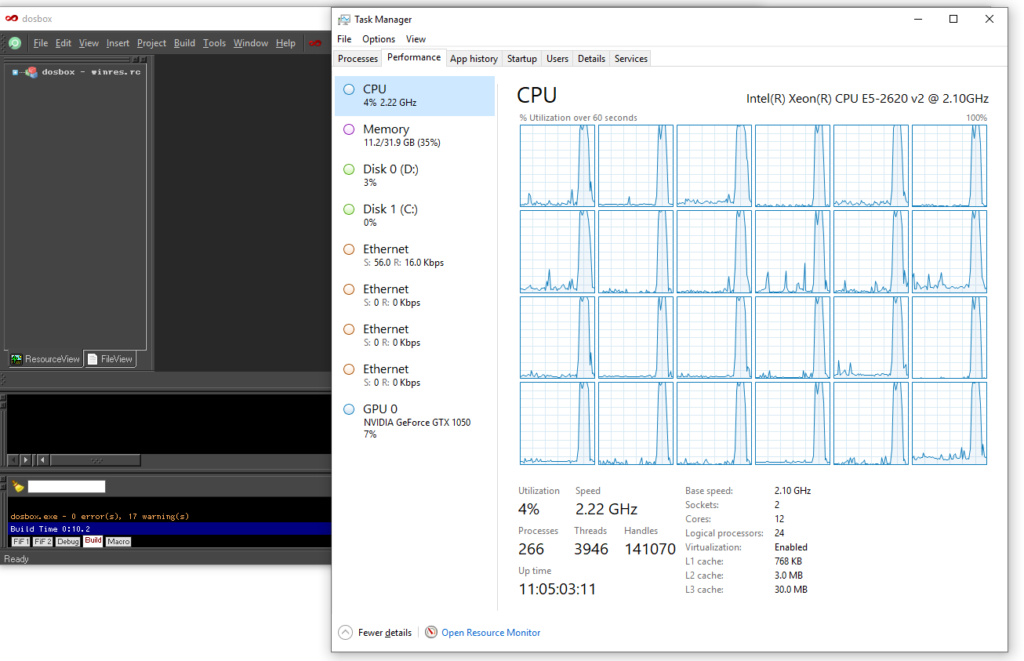
10.2 seconds in parallel!
I haven’t ordered new processors, so the 2.1Ghz parts are… lacking. However being able to use all available cores makes building DOSBox pretty fast.
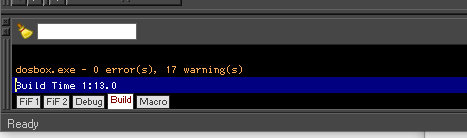
Restricting the build to a single process takes 1:13 while the full parallel build on this machine takes a mere 10 seconds!
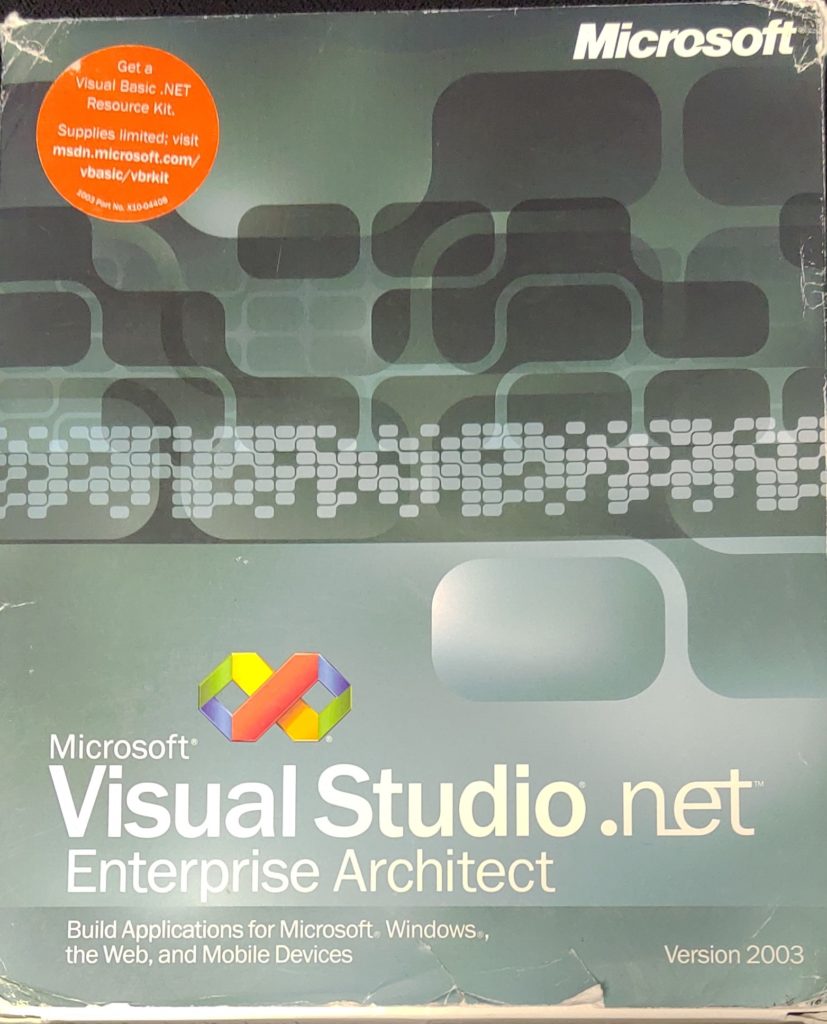
I uh, also saw this on archive.org, which may help people looking for this stuff from the future as old tools get harder and harder to find. Especially bigger editions like the Enterprise Architect version.
better performance than v2, sure, but for interactive stuff.. not so much.
So what is really going on here? Why is 0.90 so much faster when it comes to doom, and how is it possible that it’s the slowest in raw CPU performance. And fastest at IO? It appears that the crux of the issue is simply how it handles its IO, heavily favoring device performance VS CPU.
I’ll have to follow up with more builds and reading release notes to see what changed between releases. And what was it exactly that broke between gcc 3 and 4, and why the rip had to be.
I still like 0.90, if anything for it’s ability to run NeXTSTEP and NetWare.
That’s right ARM Linux userland! I still have high hopes for Windows on ARM (I have 2 Windows RT devices now!!) although I’m not holding my breath.
Maybe there will be some ARM boards that are suitable for the desktop that aren’t over 1k USD.. That’d be nice.
Interesting trivia is that the Linux Subsystem started it’s life on ARM as a way to run Android binaries on Windows Phone. And true to everything Microsoft does, it got to the point where it could start to run things (albeit poorly) and was summarily killed. Although it’s found life despite the original false start as a general ‘text mode’ subsystem for Windows.
However running Linux binaries on Windows currently just shows that NTOS isn’t as efficient as the Linux kernel when it comes to emulating the Linux ABI. Although this was the original ‘dream’ of the microkernel, and a POSIX subsystem for NT was always part of the original design, although it really was more of a checkbox for GSA contracts, and outside of being able to use pax & vi it really was handicapped by not having BSD extensions, and especially by not having any access to the TCP/IP stack.
EDIT*
I should add these notes from the future past for the future me, when messing around with Windows Server 2019 build 1809 when they finally brought the Linux Subsystem into the fold. Unpacking the distribution and running the ‘setup’ sets it up DIRECTLY into that directory. So put it where you want it.
When you mess that up, you have to use the wslconfig program!
Of note is:
wslconfig /list /all Lists all distributions, including ones that aren’t currently usable. They may be in the process of installing, uninstalling, or are in a broken state.
wslconfig /unregister <DistributionName> Unregisters the distribution from WSL so it can be reinstalled or cleaned up.
This way you can now clean up your mess, and get Linux installed right.
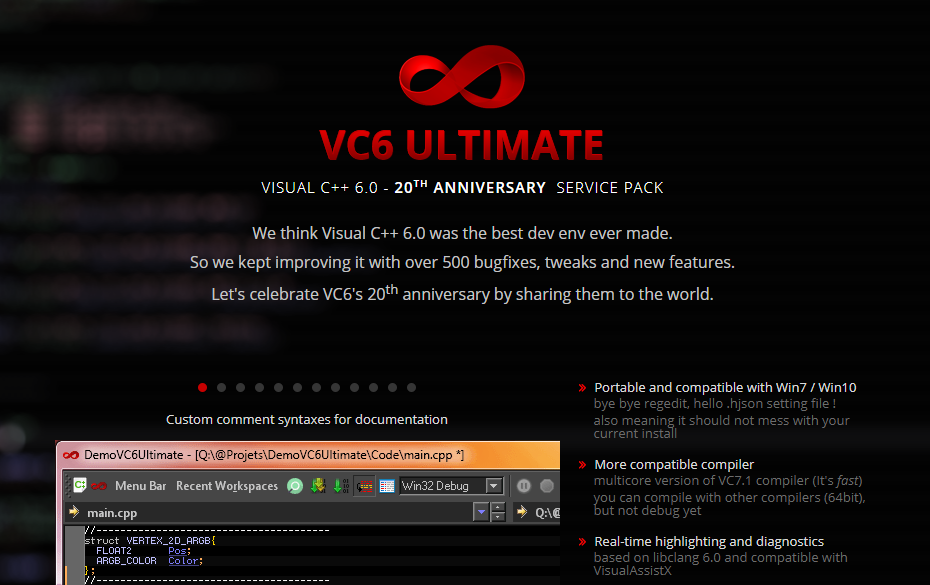
I saw this the other day, VC6 Ultimate. It’s an interesting ‘update’ on the old Visual C++ 6.0 product with an improved UI, along with updated compiler toolchain taken from later versions of Visual C++. Naturally something like this is 1000000% unofficial.
Features include:
Portable and compatible with Win7 / Win10
bye bye regedit, hello .hjson setting file !
also meaning it should not mess with your current install
More compatible compiler
multicore version of VC7.1 compiler (It’s fast)
you can compile with other compilers (64bit), but not debug yet
Real-time highlighting and diagnostics
based on libclang 6.0 and compatible with VisualAssistX
Real multicursor editing
search, sort, number, evaluate, etc. while in multicursor mode
Improved UX and UI
32bit icons, dark skin, lot of visual hints
multi-monitor friendly
revamped dialogs (project settings, threads, breakpoints, …)
searchable command palette
It’s free (as in free beer)
ever had to pay for a birthday present ? 😉
Every change has a toggle
only take what you like, but we can not check each combination
It’s an internal spare time project
don’t expect everything to work in every setup, but feel free to reach out
Included in the bundle is the following compilers:
clang version 3.8.0 (branches/release_38)
Target: i686-pc-windows-msvc
Microsoft (R) 32-bit C/C++ Optimizing Compiler Version 13.10.6030 for 80×86
Copyright (C) Microsoft Corporation 1984-2002. All rights reserved.
Microsoft (R) C/C++ Optimizing Compiler Version 14.00.40310.41 for AMD64
Copyright (C) Microsoft Corporation. All rights reserved.
It’s an interesting project, although I tried to re-build some Visual C++ 2003 projects and it bombed out. Maybe it’s just more geared towards VC 6 as indicated.
I know that on the surface it may not seem like much, but considering the last update was nearly 3 years ago…
2019-02-08 Â Â
Time flies, it’s flying fast, and it’s been two years till now. The latest Chinese revision, the Fifth revision of the book:”A Heavily Commemted Linux Kernel Source Code” is now HERE, and, more importantly, the English version of the book is also given HERE. After nearly one year of translation, the English version of this book has finally been completed. Of course, there must be translation errors and tipos in the book. I hope you may point them out for me. Finally, thanks Trent Jarvi who helped me a lot, thank you friends in the Linux communities, and thank you all, and Happy Chinese Spring Festival!
Yes, that’s right the book is now available in English. And in PDF form! It’s an extensive dive into the 0.12 source, complete with diagrams, notes and annotated source code.
It’s a whopper though, 1109 pages, and weighing in at 11 MB! This is not a light read!
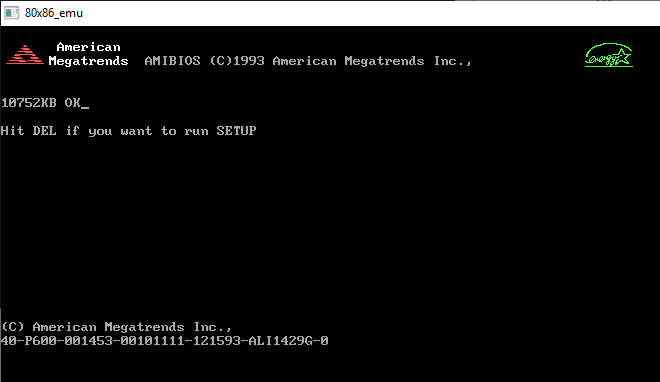
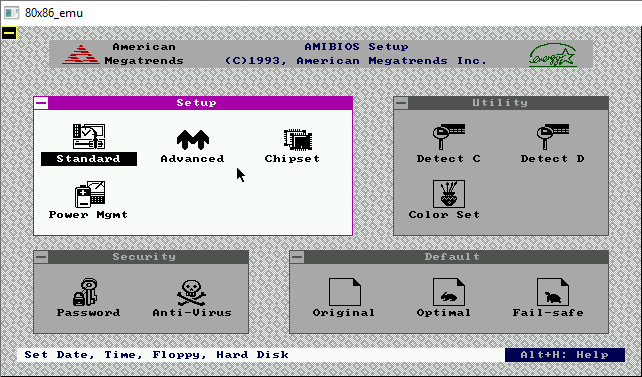
Some time ago I raised a challenge: make a PC emulator 80486 in Basic !!!
To achieve this, I used a very old version of PCEM, with the help of “FreeBasic”, starting from PCEM-V4.1, about six months ago, I managed to make it work, in 80286 mode only. Then I went little by little adding functionalities of the following versions, until arriving at the V8 (not completely, but if great part). Due to the complexity and lack of speed in BASIC, I have only converted the modules that have interested me the most, eliminating many unnecessary ones, so I have managed to reach an 80486-DX2-66mhz with FPU, 16mb of RAM and VGA TSENG of 2mb. I have removed many non-necessary modules, such as the sound (it does not have any sound), the LPT port, the PS2 port, the FDC unit and more. It has many faults, but in general they work VERY well, and it is capable of running “WINDOWS 3.11”, “Deluxe Paint”, “Wolfstein 3D” and many other programs. It can reach a resolution of 800×600 to 16 colors, but it moves better in 640×480 16 colors. The keyboard fails, all the keys do not work, and neither EMM386.EXE nor EXPANDED memory can be used, because it fails and becomes very slow. It works in both protected mode and real mode, but when entering protected mode, the PC becomes slow.
It’s slow, but yes, it runs!
It only has one config hard coded, as jepalza ported enough of it for this one config. Oddly enough it’s my least favorite the ‘winbios’ 486.
I have to say this is pretty cool!
As always, here is my mirror (usual 404 page reading required) here: PCEM_FB486.rar
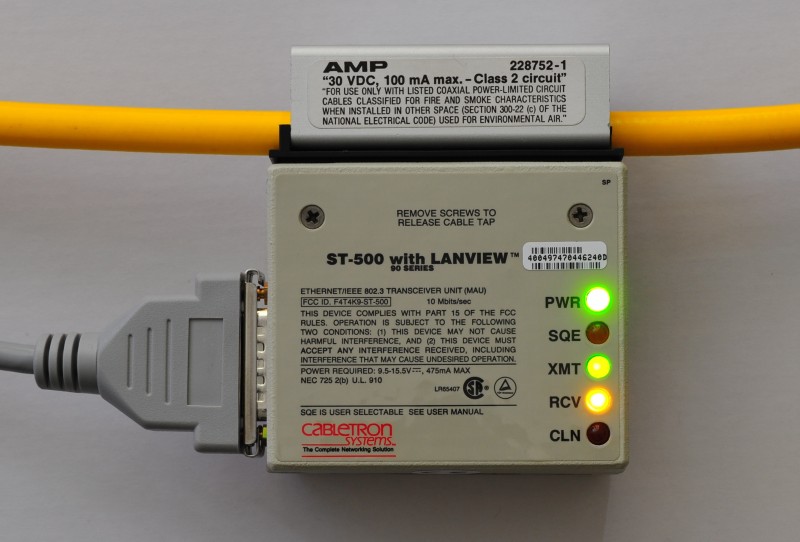
I didn’t get into networking professionally until 1996. It was at a certain bank that is full of Americans in a hurry. Anyways, as part of the line of interrogation from some outside consultant he pulls out a vampire and does the old man rant of ‘I bet this kid doesn’t even know what this is!’ bit.
Except I did.
Although to be honest, I’d never seen one in person, but I’d read about them in some ancient book about Unix Networking that went over in great details how to put down the cable, how to pay attention to the black bands in the cable, as they are the only place you should be tapping, how to use the tapping kit, and how to secure the vampire to the cable, along with the appropriate AUI cable to the host (PC).
So yeah, I did get the job. The old guy was genuinely shocked.
When the best friend becomes an enemy, and the main villain becomes you yourself and blood flows like a river, someone will definitely have to answer the main question – Who is behind the awakening of ancient evil and is there still a chance for humanity?
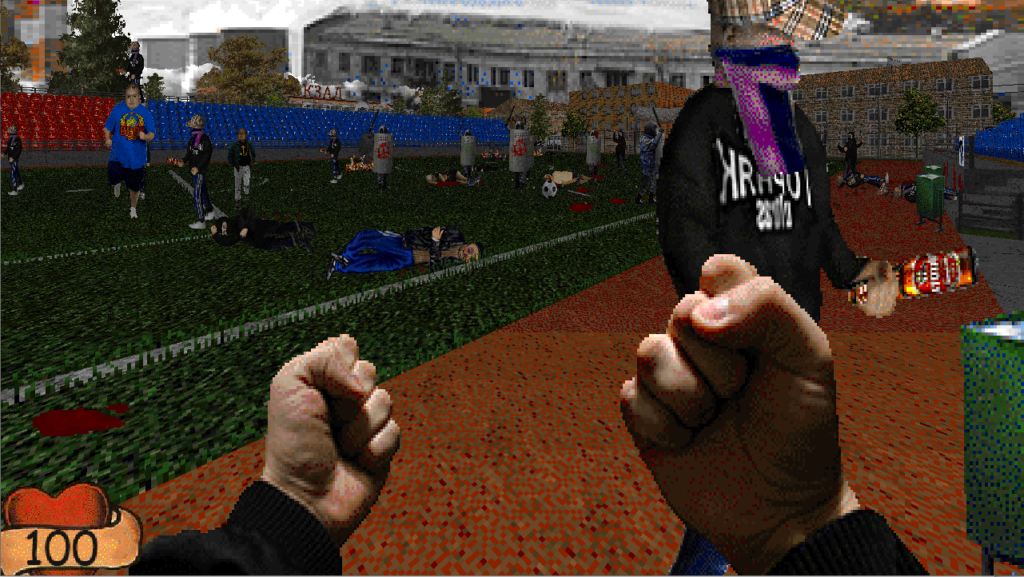
I saw this ‘gem’ pop up on steam for $3.50 HKD (so $0.50 USD?) and thought what the hell let’s try it out. SharpShooter3D is well, a DooM mod of sorts, but it also feels a lot like Duke3D with the inclusion of vehicles and ‘moving room/vehicles’ like train cars. At it’s heart is GZDoom 3.3.2 which states in the license:
Parts of the voxel code in the software renderer use code from the BUILD engine by Ken Silverman and are used under the terms of the GPL v3 with permission.
Well isn’t that cool! The best of Duke3D and Doom! All in one.
It captures the imagined feel of the eastern block, old factories, nuclear power plants, lots of guys in trainers & Adidas all over the place, along with copious alcohol and milk (yes milk is the health thing here!).
Not to mention the punk sound track is pretty good for such a seemingly ‘low end offer’. Had this come out 20 years ago, it really would have set the world on fire, and probably set off quite the few controversy, but today it’s a discount mod that no doubt the devs did put a bit of work into.
I have no idea if the game is 90% off for the rest of the world, but I’d say it’s worth a look at the price.