I love how the video author casually makes a 9 second run.
I haven’t tried it yet, but I’m suspecting 15 seconds would be about my fastest.

I love how the video author casually makes a 9 second run.
I haven’t tried it yet, but I’m suspecting 15 seconds would be about my fastest.
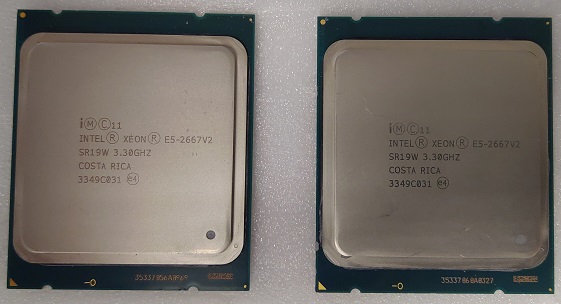
Moved up from the old pair of E5-2620 v2’s to a pair of E5-2667 v2’s. What a big difference from a base clock of 2.1Ghz to 3.3Ghz. And yes, more cores!
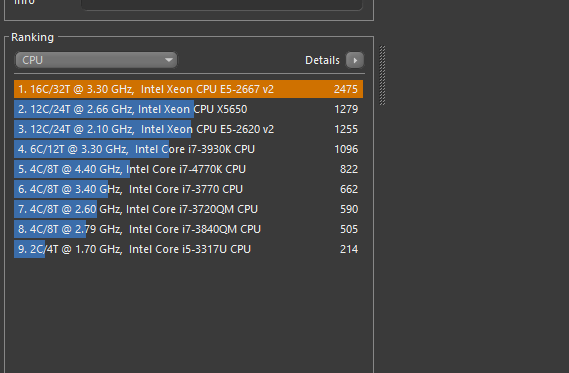
And I can build DOSBox in 3 seconds using Visual C++ 6.0 Ultimate. I guess eventually I’ll get a modern machine, but for now this is pretty damned good. Which reminds me the newer processors for my 2006 Mac Pro should be arriving soon enough.
I couldn’t quite justify the more than double price for the E5-2697 v2 processor, although it has 50% more cores, but with a max clock of 3.5Ghz.
Oh well it’s as good as any update to the Huananzhi X79.
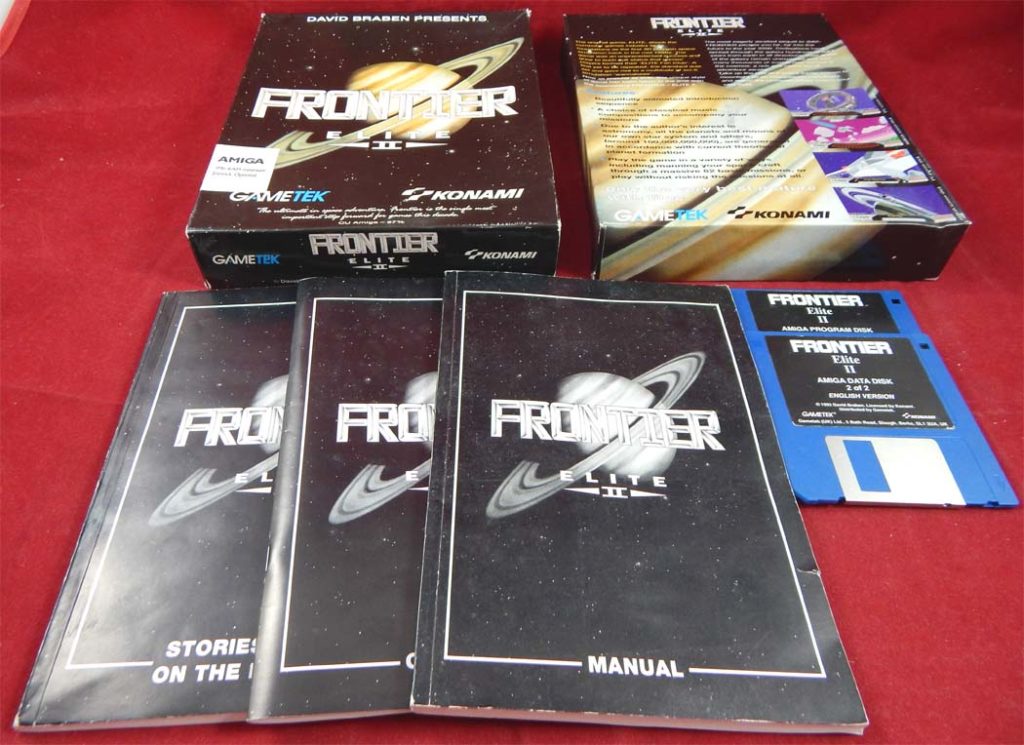
A while ago I had chased FrontVM to moretom.net and found 2 links. One from 2003 which is a dead link, and the 2004 version which was archived by the wayback machine!
It was an interesting build, as it still used 68000 emulation from Hatari/UAE this pre-dates the 68000 to C or i386 ASM. However since it ran (mostly) the original code, it was more ‘feature complete’, although loading save games is broken for some reason (I think the decryption was not disassembled correctly). It was actually a stupid file mode setting. I just updated the source & put out a new binary, testing save games between Linux &Windows.
Anyways, it originally built on Cygwin, so I filled in the missing bits, and have it building on both MinGW & Visual C++
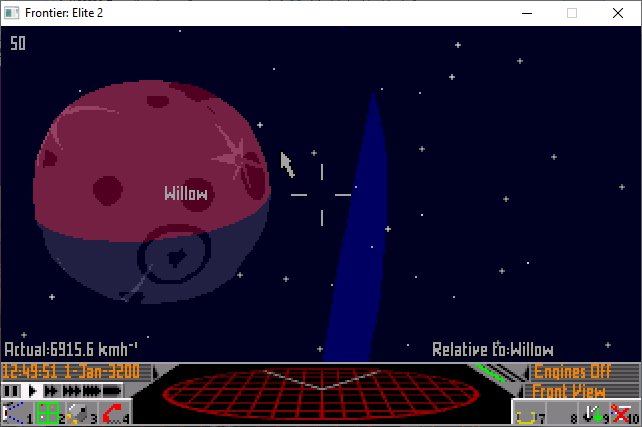
So yeah, it’s Frontier, for the AtariST with the OS & Hardware calls abstracted, still running the 68000 code under emulation. I think it’s an interesting thing, but that’s me.
I put it and the other original versions I found over on sourceforge.net
Oddly enough it’s already been downloaded, so go figure.
I’m not a big sequencer as I’m just terrible when it comes to music. But apparently on Wikipedia Propellerhead had set the download free, although download links now are inoperable.
After a lot of googling around I found it split up on one of those annoying download sites. So I spent the night waiting for stupid timers, training an AI to sport automobiles & intersections (lol redlight camera training), and as a reward I got the download.
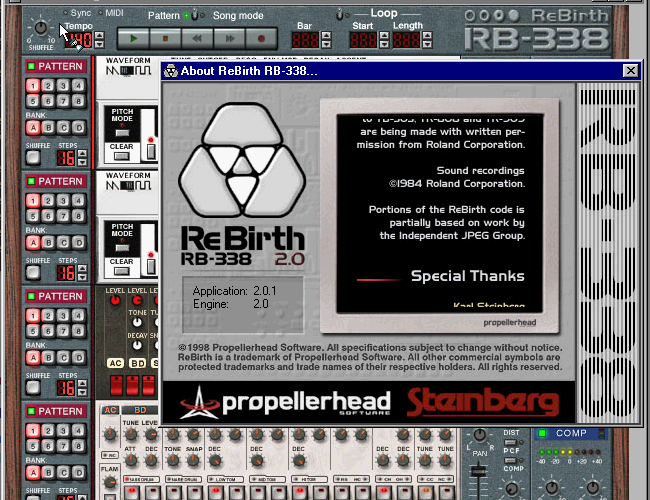
I installed it on the floppy version of Windows 95 on Qemu where it needed IE 5.01, Direct X, Winsock 2 & Windows 95 SP1 updates (among others…) and yes it works!
Included in the downloads is some assists so you can run it on Windows 10 x64 if you are so inclined.
Also there is some MacOS X images, although I haven’t tested them. I need to drag my G5 into my office to try it, but it’s getting late, and I want to go home.
I put the download up over on archive.org. You can download it here:
https://archive.org/details/ReBirth-338v2.0
Since this time my upload to archive.org has been deleted. I was also trying to remove all the google accounts I have and when I changed the email address away from google all my uploads became ‘unknown’ so maybe they are hidden? Anyways over on Wikipeida just use citation #19, and you can download it there.
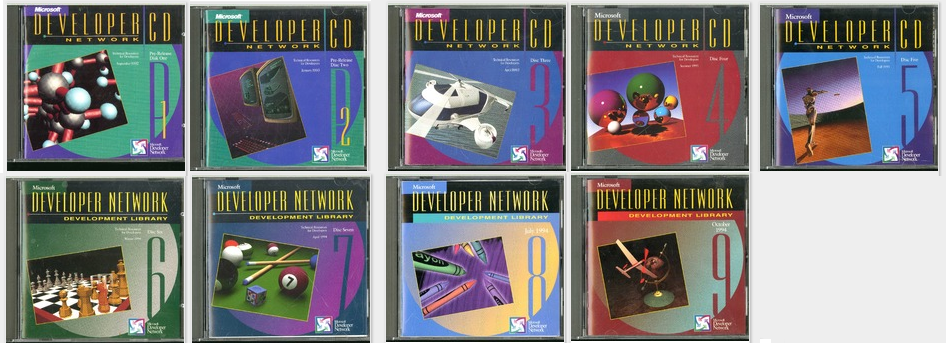
I ran across this, and thought it was cool. These CD’s are getting harder and harder to find, and unless you want the old physical disks, getting ISO images is, of course the next best thing.
Granted these disks replaced the much older Microsoft Programmer’s Library. The new CD’s use a Windows based search & interface program removing the clunky old MS-DOS program that made it feel like trying to view the world through a straw. (Although the up side of the MS-DOS version is that you could easily dump the video RAM and save the contents to plain text).
And in this brave new post Windows 3.0 centric world of Microsoft just about everything regarding OS/2 was dumped, and the seeding of Win32 via Windows NT had started.
Naturally after winning this war, Microsoft withdrew many low end products and just couldn’t compete with the tidalwave that was GNU/Linux.
At any rate for the curious kids down the road that want to see what all the fuss was with Win16, and how Windows 3.0 had changed the landscape removing the force of IBM it’s worth a look.

For those who are interested in ‘free’ giveaway type things, Bethesda is giving away The Elder Scrolls III: Morrowind. Just use the code
TES25TH-MORROWIND on their store thing here.
You have until the 31st!
Since I already have an account from the Fallout 76 debacle, no biggie for me.
Also for the MS-DOS fans out there, you can get Arena & Daggerfall with no registration required!
Enjoy!
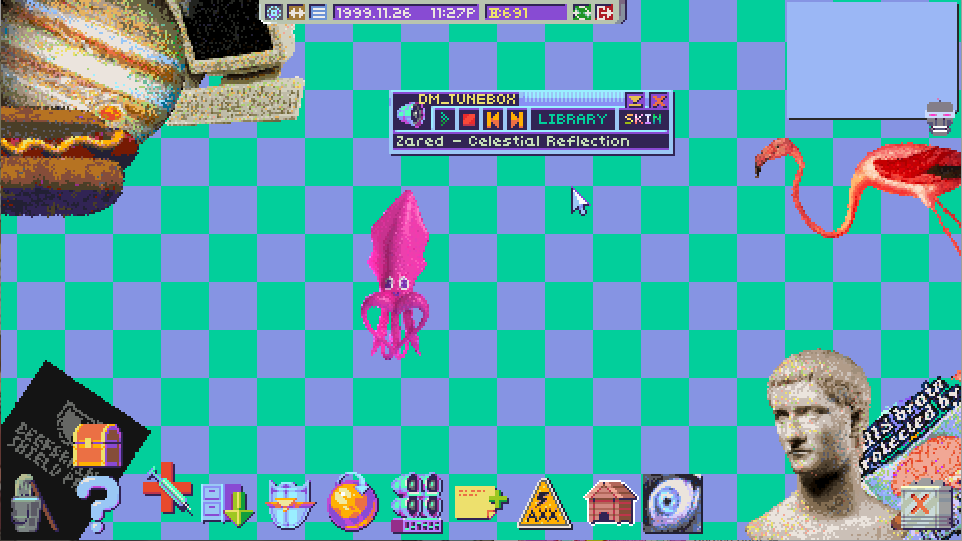
It’s an interesting twist on the typical point & click adventure game. How so? Well simply put it’s all based on web technology! With a big emphasis on that late 90’s vibe! Complete with ‘desktop pets’ animated GIFs, blinking text, and embedded MIDI (and even more sophisticated music).
While it’s obviously not real, the entire ‘web’ is stored locally (even in it’s own lore), it’s still fun to dig around in.
You play as an “Enforcer” basically it’s like back to the AOL days of walled gardens being patrolled by unpaid volunteers. Look for banned content and flag it appropriately. As the game progresses things go off the rails, near riots, helicopter crashes, amputations, culminating in a Y2K crash that kills people.
I totally missed out on this being a crowdfunded thing, and found out from Steam recommendations of all things.
Even for the aesthetic alone, I think it’s worth it. Some of the game play is too much wrapped up into it’s own lore, so paying attention is kind of important.
I always seem to find out about things after the fact, but yeah it started yesterday.
Naturally I have too much going on locally to just drop everything and run to Japan.
Such is life.
Yes, I know it’s kinda pointless as it’s horribly out of date, but I’m still having fun. Anyways now it’ll integrate with dynamips!
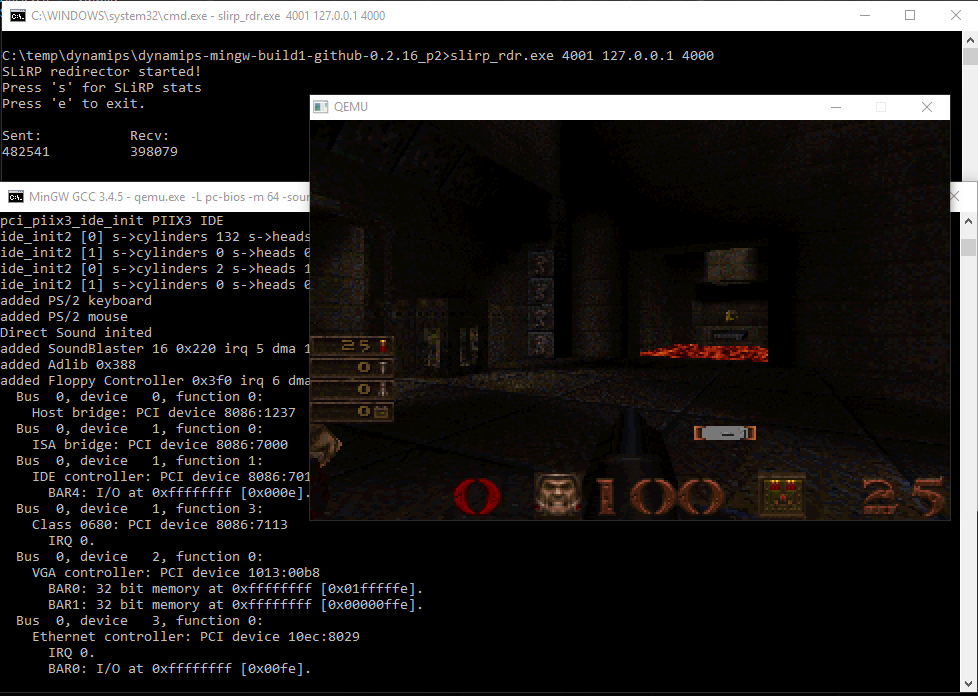
So yeah, in this example, instead of the usual “-net user” and the built in SLiRP stack, this uses UDP to talk to a stand-alone SLiRP stack. This will let you plug your Qemu into virtual Ethernet switches/hubs and interfaces of virtual routers. Even mixing and matching connections to different emulators that use UDP to exchange packets.
In this case I have a VMDK loaded with a NE2K-PCI driver, and QuakeWorld for MS-DOS. I also made the MPU401 external although it’s hanging on a secondary flag…
qemu.exe -L pc-bios -m 64 -soundhw sb16,adlib -mpu401 xx -net nic,model=ne2k_pci -net socket,udp=127.0.0.1:4000,remote=127.0.0.1:4001 -hda qworld.vmdk
This has the Qemu instance listen on UDP port 4000, and connect to the same physical host on port 4001.
The recipical for the SLiRP stack from my bashed Dynamips is:
slirp_rdr.exe 4001 127.0.0.1 4000
Which in this case listens on port 4001, and connects back on port 4000.
Hopefully it makes some sense to someone.
Download it, if you want!
ticks for demo (fewer is better)
| Version | ASM FixedDiv/FixedMul | C |
|---|---|---|
| 0.9.0 | 259 | 268 |
| 0.10.5 | 299 | 300 |
| 0.11.0 | 316 | 317 |
| 0.12.0 | 289 | 281 |
| 0.12.5 | 290 | 282 |
| 0.14.0 | 282 | 274 |
| 0.14.1 | 280 | 269 |
| 20180430 | 192 | 195 |
| 20190218 | 187 | 187 |
So after the last round, I went ahead and dug out my crap version, where I had just recently found a nice abs() fix for a FixedDiv issue that the old iD code suffers from, and re-built a version of DooM that both used the assembly fixed division, and another with the C version. To compile I used my old GCC 2.7.2.3 to build with the flags:
-m486 -msoft-float -ffast-math -O2 -fforce-addr -fomit-frame-pointer
So here we go using the versions of Qemu that I can build quickly with GCC 3.4.5 MinGW, along with the last two pre-built Win64 builds.
It’s kind of interesting just how close the performance is between the two versions.
Naturally the real test is to run it on actual hardware, and to try a few versions of Watcom C.
Maybe the real takeaway is that Qemu runs GCC built code better…?