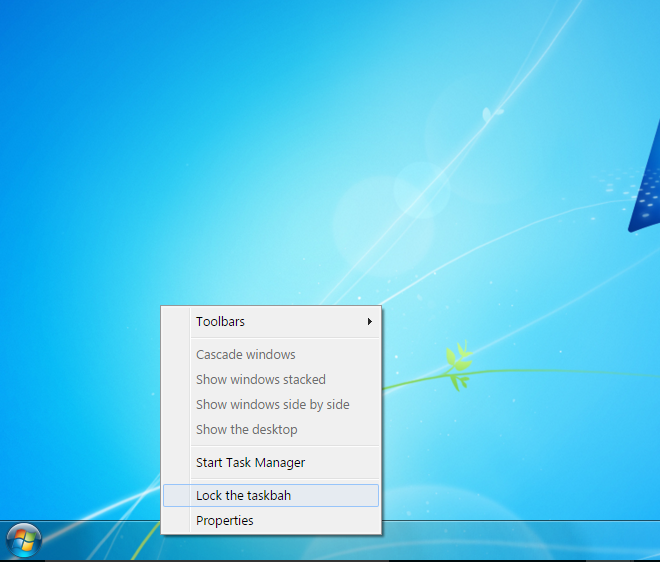
Yes, I know it’s “silly” but check out “Lock the taskbah“.

Yes, I know it’s “silly” but check out “Lock the taskbah“.

#OldYeller
After much internet speculation, and supporting evidence, it has finally come to pass.
The VAX platform is no longer supported on OpenBSD.
The VAX was the genesis of 32bit BSD UNIX, and once more again a BSD moves away from the ancient origins.
RIP VAX, rest in 32v.

No, its really happening.
From Microsoft:
http://blogs.microsoft.com/blog/2016/03/07/announcing-sql-server-on-linux/
Its built to run on Red hat. Â Too bad its a private preview, so yours truly didn’t get the invite.
Off again!
But I’m busy again.
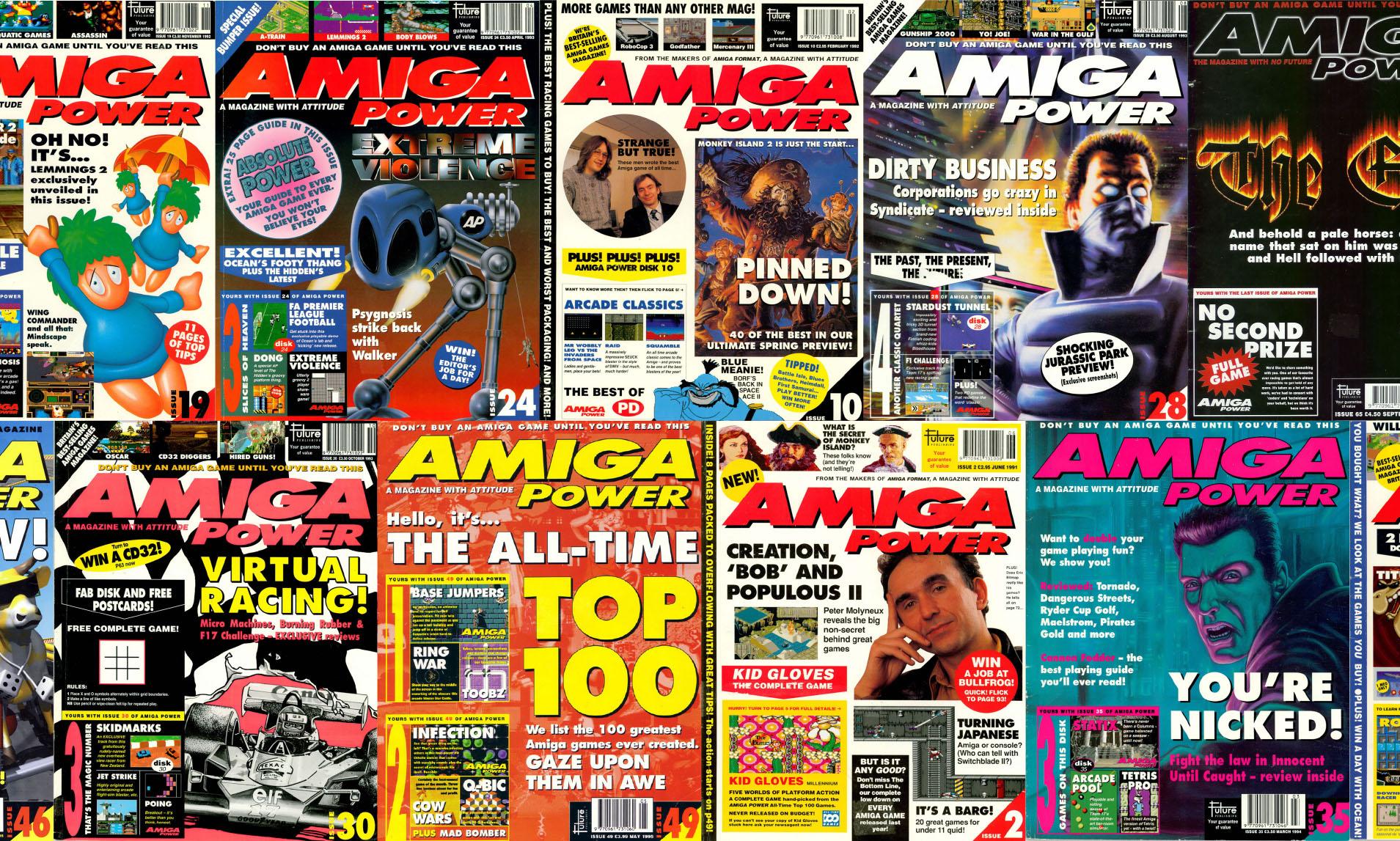
Amiga Power!
In the mid-Nineties one gaming magazine ruled them all. It was a magazine known for it​​s irreverent attitude, surreal sense of humour and occasional run-ins with developers; it was a magazine that ran on far longer than the useful life of its subject matter. That magazine was Amiga Power.
Working with Darren Wall at Read Only Memory publishers, the Guardian has tracked down several of the staff who made the magazine such an influential force in games journalism. For one night only we’re reuniting the team to discuss the great moments, the ridiculous controversies and the unforgettable games that made Amiga Power such a legendary publication.
If you’re interested in retro gaming or the history of the British gaming scene, join The Guardian’s games editor Keith Stuart and guests for an absolutely unmissable night of nostalgia.
Thursday 21 April 2016, 7pm–8.30pm
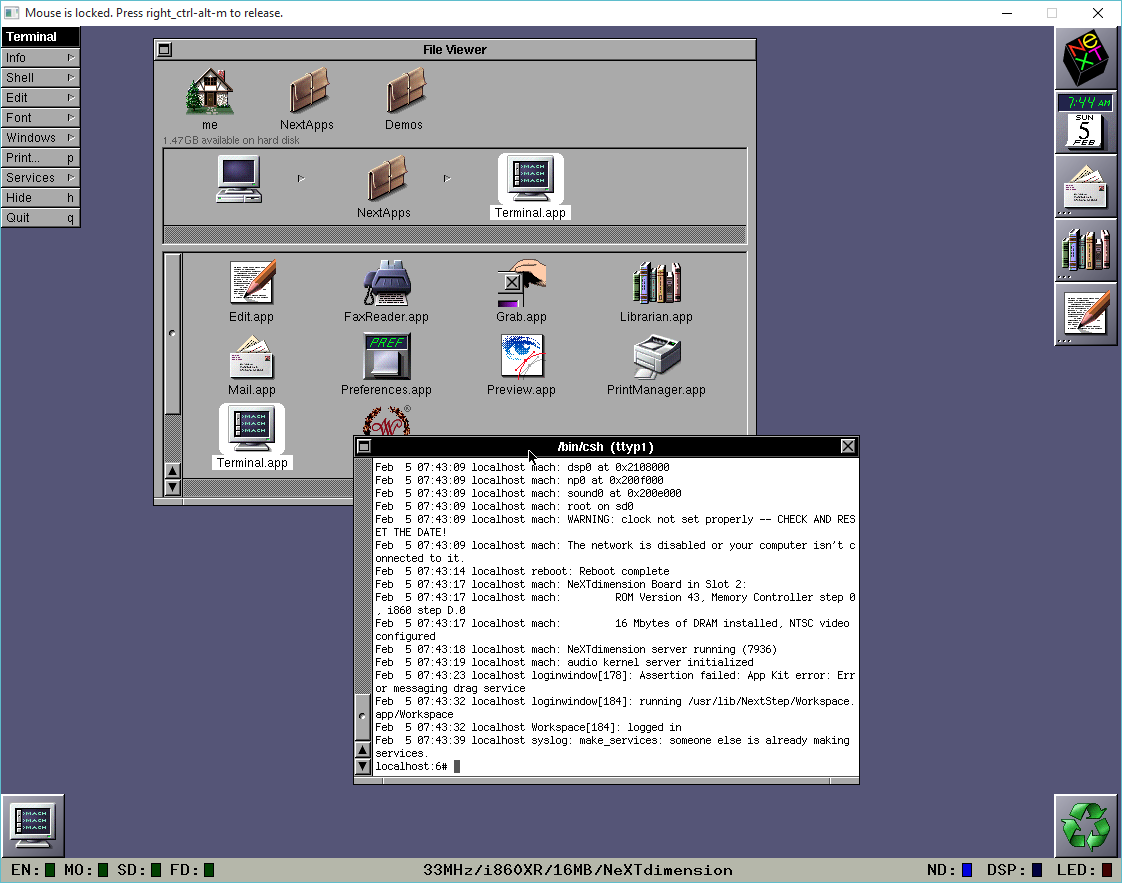
NeXTdimention!
It’s really cool! Â And as an added bonus, it can now run in ‘Variable’ speed, meaning as fast as your machine can emulate the 68040.
OS X version here, and Windows version here. Â For me, at least a bunch of DLL’s are missing, so I put together a quick package containing the Windows version with all of the missing DLLs here.
From the announcement:
Hello all,
I am happy to annouce the release of Previous v1.4! Simon did lots of work on emulating the NeXTdimension and he considerably improved timings and efficiency of Previous. Furthermore there is now a mode to accelerate the emulation beyond the performance of real systems. Other improvements and bugfixes are listed in the readme.
Emulating the NeXTdimension board was something i thought would not be feasible. But thanks to the i860 emulator from Jason Eckhardt and the work of Simon, who improved and completed parts of it, it finally came true. I hope you enjoy it!
So as a totally unfair test, I thought I’d load SQL server 6.5 on it.
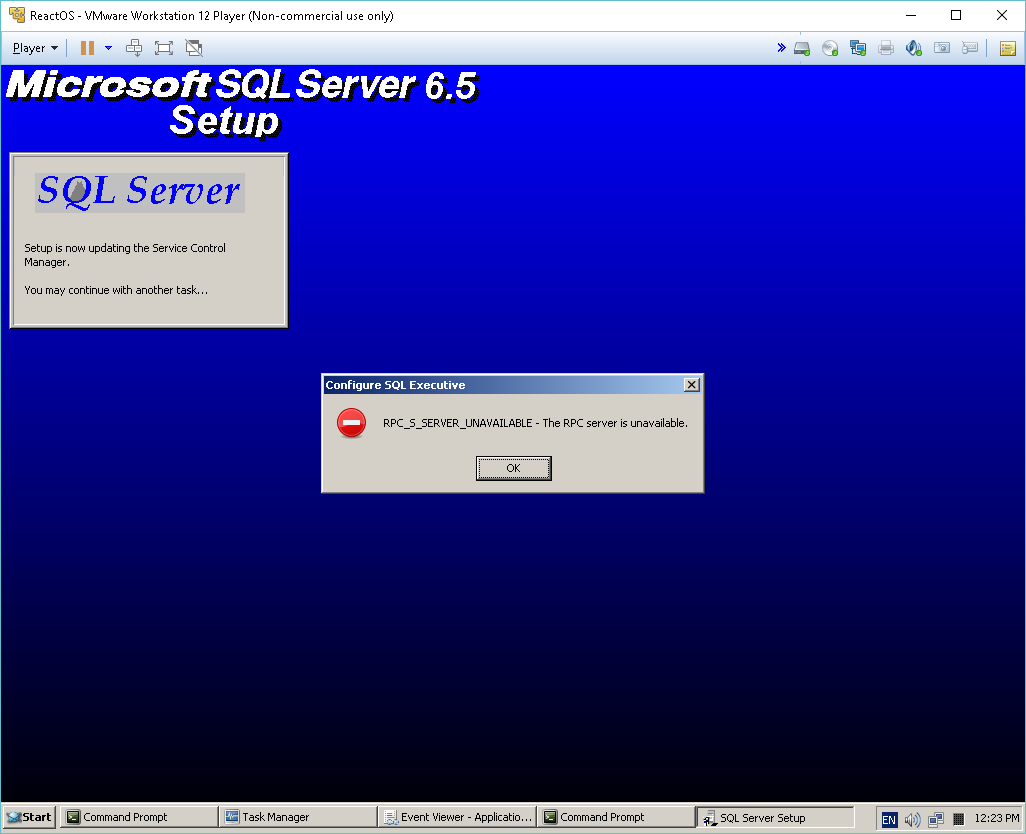
SQL Server 6.5 on ReactOS
After copying in some NT 4.0 dll’s regarding licensing it’ll start to install but the service itself doesn’t work.
bummer.
MSDE2000 didn’t work either.
And the setup program from SQL 4.21 just crashed.
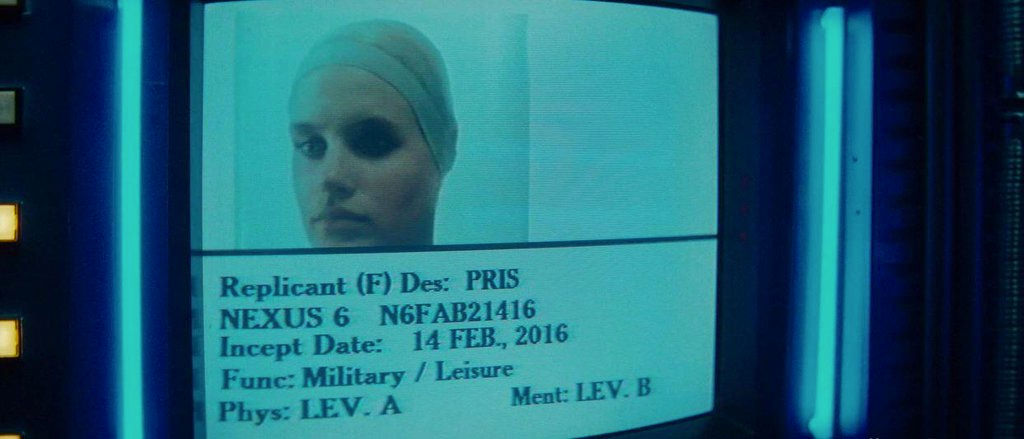
Incept Date: 14 FEB 2016
For all you Blade Runner fans.
So I’ve always heard about the incompatibility, and I thought I’d give it a try in PCem. Â I know I used to run DR-DOS 5.00 and Windows 3.0 (because of the CGA driver) and it worked fine.
So just to prove it works, here I am installing Windows 3.0 on DR-DOS 5
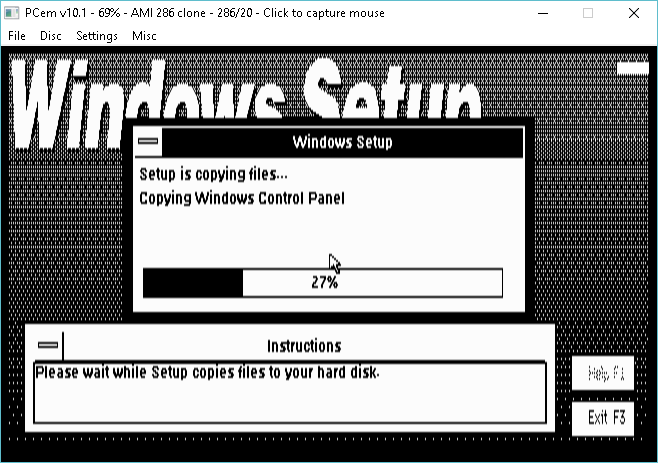
Installing Windows 3.0
And even better, running Word 2.0! Although I did install a whopping 4MB of ram on this virtual 286.
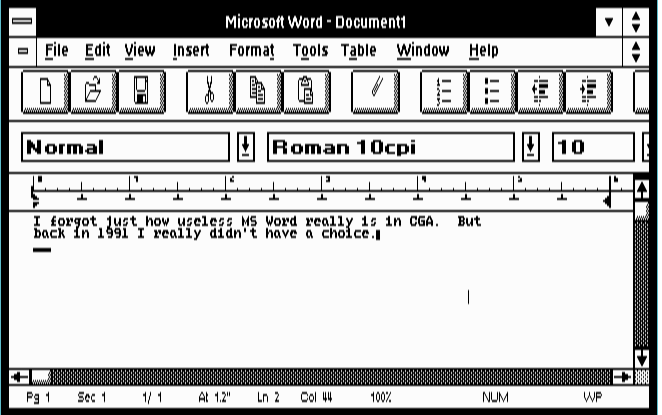
MS Word 2.0
And to make it all the better, I changed to a 386, and re-installed Windows 3.0 and yes it runs in enhanced mode. Â And I can run DR-DOS in a windows.
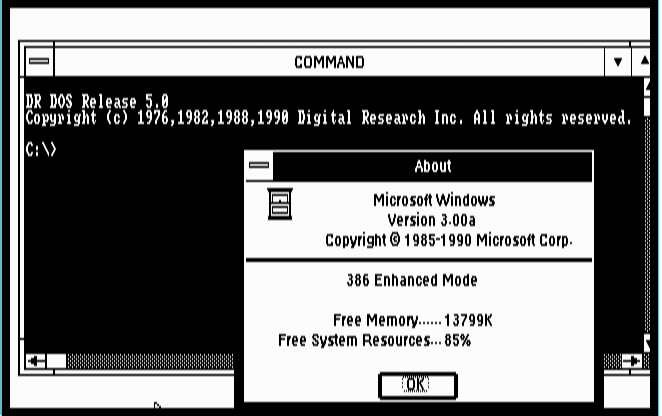
386 enhanced mode
Of course there was the AARD code, in the Windows 3.1 betas, but as far as I know that didn’t make it to release. Â I was able to upgrade to a virtual VGA adapter, and update to Windows 3.1 in standard mode on a 286, just fine
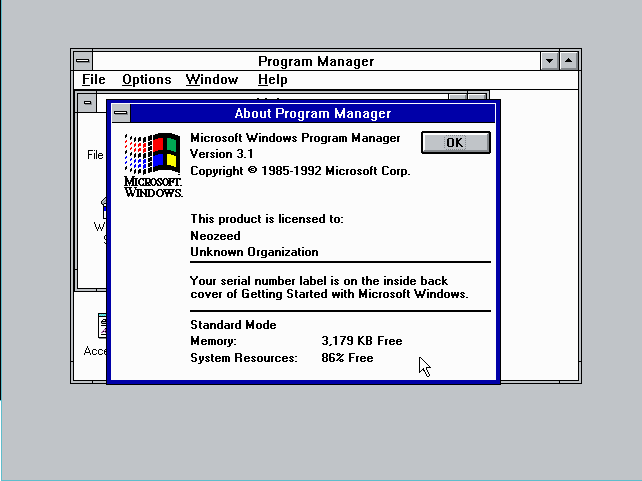
Windows 3.1 standard mode on a 286
And DR-DOS worked through the standard mode task swapper
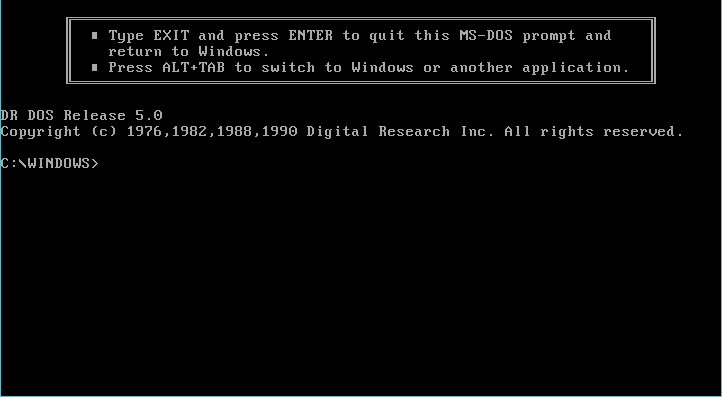
DR-DOS in standard mode
But Windows 3.1 in enhanced mode always locked up during setup. Â Maybe a PCem bug? Â I’m not sure. Â But Windows 3.0 works great.
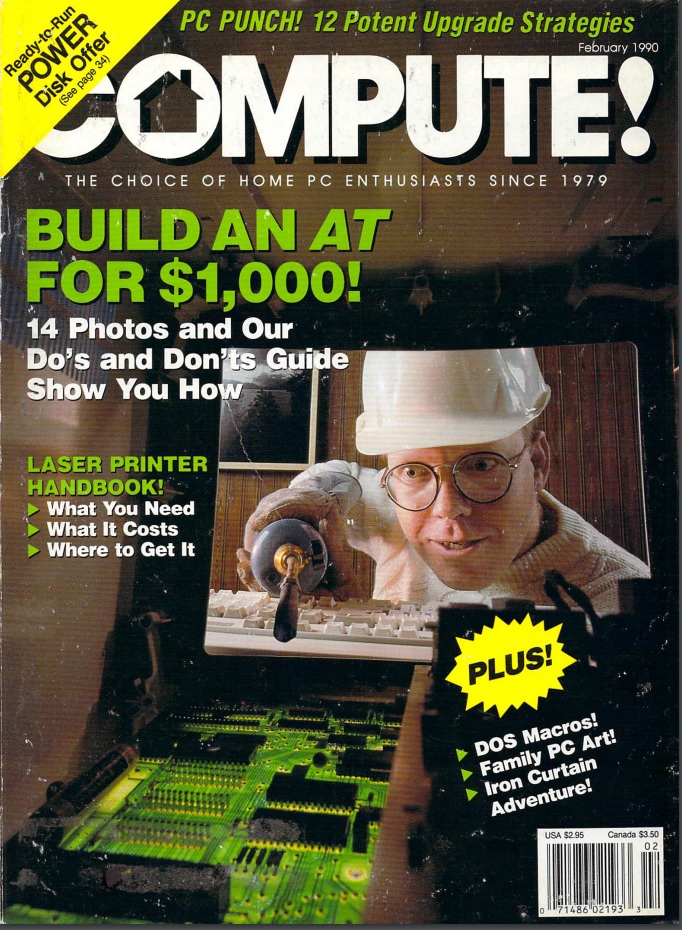
Compute! #117 February 1990
I found this browsing around looking at old PC cases, when I came across a picture of a baby AT case, and I thought I remembered what it was from, a great magazine article showing how to assemble a PC.
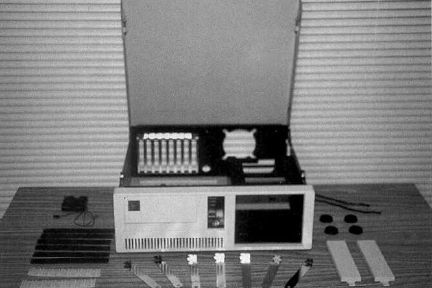
Baby AT flip case
So thankfully over on archive.org they have a PDF of the magazine, along with the archive of Compute! magazines! And of all places atari magazines has the full text, along with black and white pictures of the article.
For those inclined to follow it starts on page 20.
In a lot of ways the industry really hasn’t changes, and in the spirit of this, you can still assemble your own machine. Luckily the prices have fallen like a rock compared to $1000 in 1990 dollars or about $1875 US (or $2596.31 Canadian!!) For those prices you can build a machine that would put a 12Mhz 286 with a 20 megabyte (YES MEGABYTE) hard disk, and mono graphics.
For me, this article is what finally got me off of the Commodore 64 I had as a child. 1990 was not a good year in Canada, and getting that Amiga 500 I wanted so badly just wasn’t going to happen. My parents would not let me get something that expensive, however I could get a component for a 286 a little bit at a time. I was lucky to secure a 286 motherboard, used for $30 which was a great start. In around 6 months, I had finally amassed enough parts to power it on.
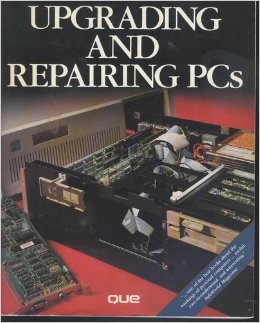
Upgrading and Repairing PCs 1989
Another fantastic book Upgrading and Repairing Pcs by Scott Mueller was, and surprisingly the 3rd edition is also available on archive.org! I rented this out at the library constantly, and it was a wealth of information on how the PC actually worked, what chips did what, and it went on and on about the amazing promise that was OS/2. Keep in mind it was 1990 already, and even in May, PC Magazine was hyping the awesomeness that was going to be Microsoft OS/2 2.0. All of that changed of course with the sales success that was Windows 3.0. And back in Canada circa 1990 I couldn’t find anyone who had OS/2 to test, sell or anything. It really was a MS-DOS and Windows world. Heck even back then I couldn’t afford a real copy of MS-DOS so instead I used DR-DOS.
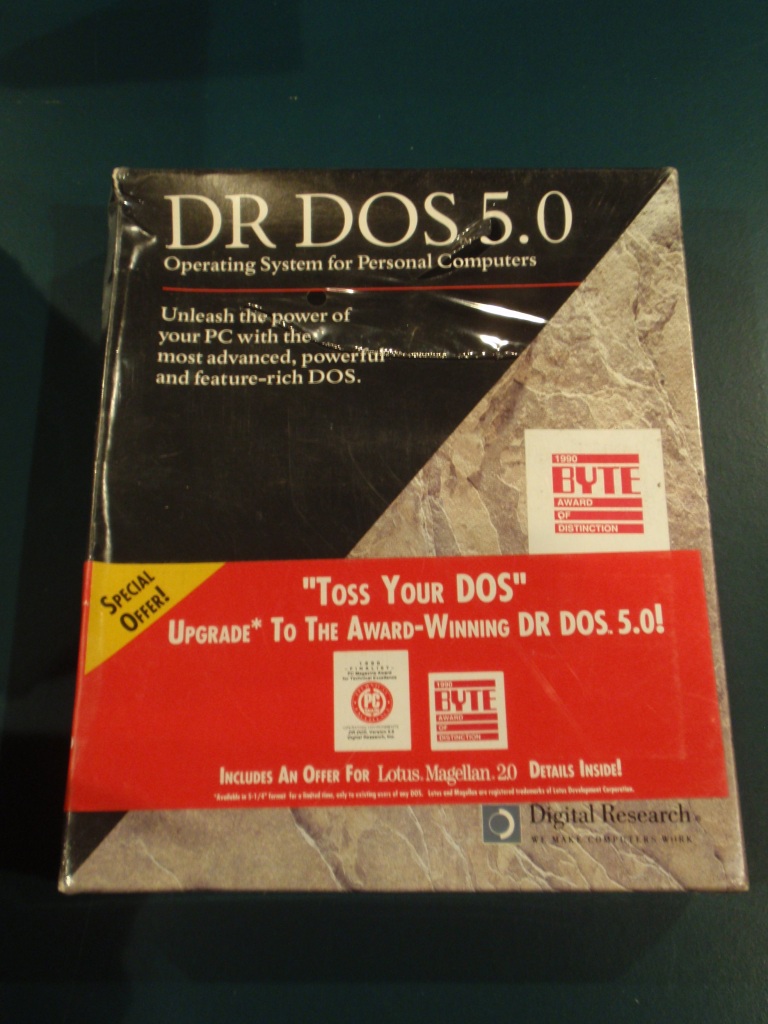
DR-DOS 5.0
I got this on a trip to the United States for something insanely cheap like $5. nobody wanted it, as it was then, or today end users don’t know or care about operating systems.
So that is what got me started, sure all my friends either had Amigas or even more powerful 386 computers, and I had an ancient Commodore 64. It was nice upgrading up and out of the 8bit world, but my trip wasn’t the easy buy a new machine, but rather get a new component like a CGA card, then wait a month, and a floppy controller, then a diskette drive.. Although once I got a power supply, and keyboard it was pretty awesome turning it on, hearing it beep, and loading DR-DOS from diskette over CGA on a TV.
The first game I got was the Tex Murphy game, Mean streets, which features awesome PC speaker ‘music’.
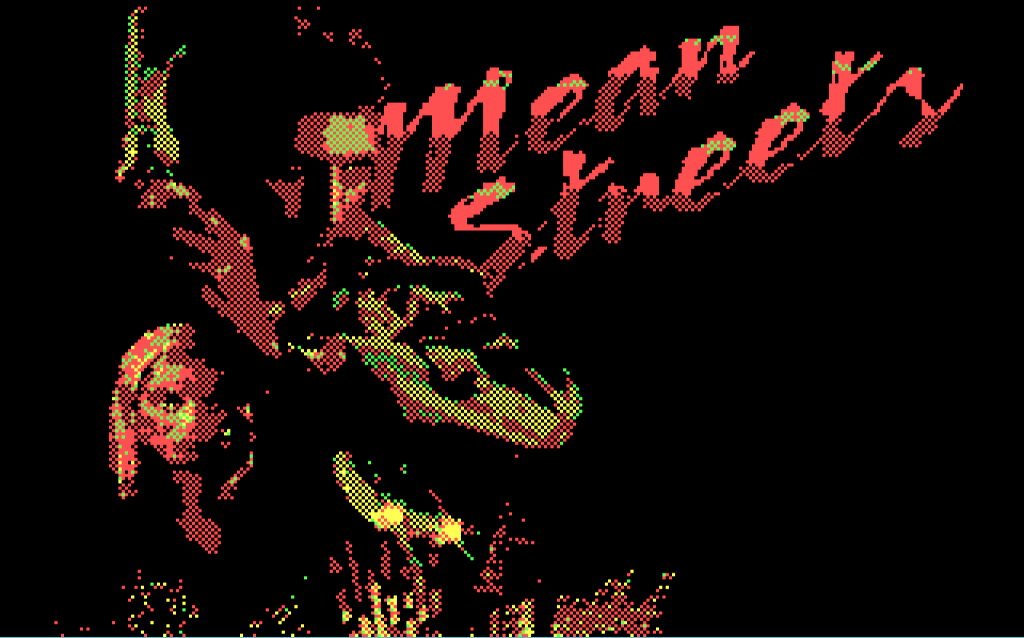
CGA
Compare the ‘awesome’ CGA graphics to the VGA graphcs I’d have to wait for another 4 years before I could afford the ultra expensive VGA card + monitor.
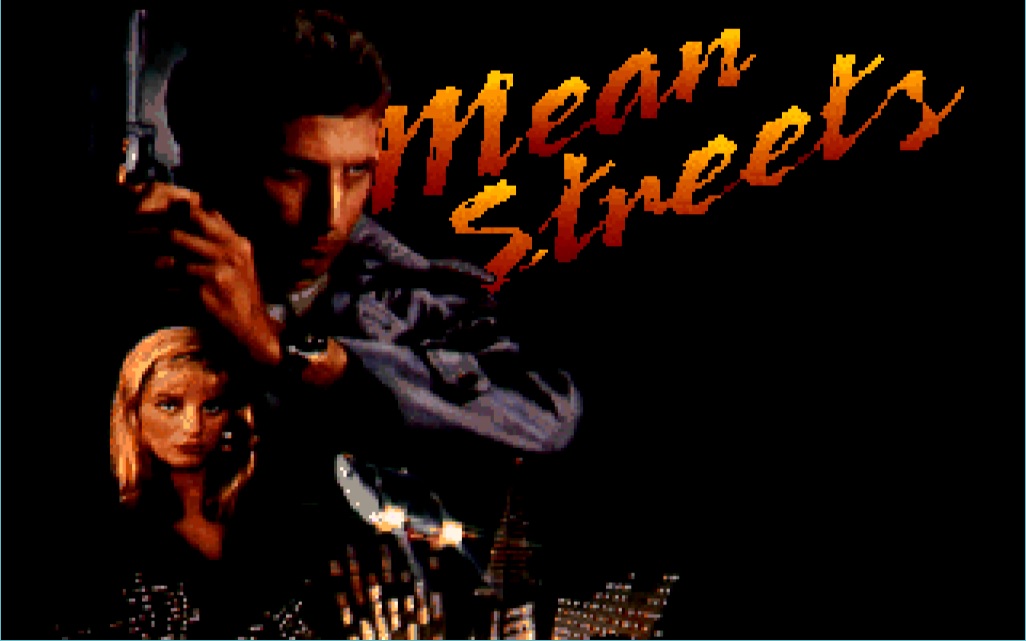
VGA
256 colours! Not bad for 1989 software. Just as they were able to do audio playback over the speaker, not requiring a then expensive audio card. Compared to the normal beeps, and low res, low color games like Kings Quest, Mean Streets really blew them away!.. Even if it was yet another point and click.
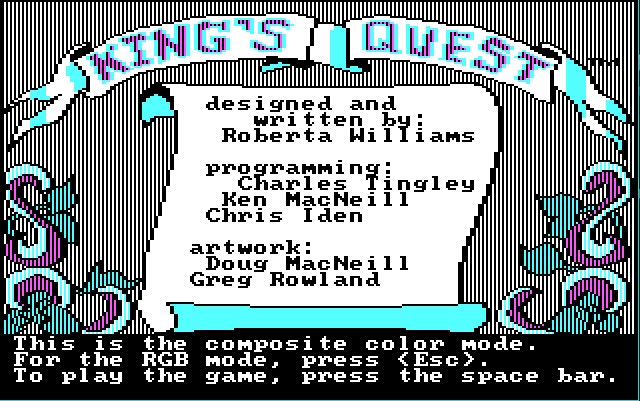
King’s Quest 1, CGA
Fun times indeed. After that I got a 20MB disk, that had issues starting so I’d pop the top off, and spin the spindle manually to get it working. Absolutely crazy, and it worked for months until I accidentally touched the platter. I was so crazy, I even ran stacker on it.
Needless to say, thanks to the writings of Bruce W. Haase & Scott Mueller for getting me started on the PC path. But Id’ rather it had been Commodore with an open platform, that I could build one part at a time.